
Asbestos removal cost: price per square foot
For most indoor asbestos removal, expect $5 to $20 per square foot. Type in the area size and, if you know it, what is being removed to view your price range.
Removal work is in the range; testing, permits, and a minimum charge may add more. Do not touch the material if it has not been tested; wait for an inspector to collect a sample.
Average asbestos removal costs across the nation
- Whole job (typical)
- $2,259
- The majority of jobs
- $462 to $6,200
- Per square foot for most indoor materials
- $5 to $20
Is someone in your home already sick from asbestos? Find out which trusts might pay
Asbestos removal cost for common areas
| Area | Usual price inside a home |
|---|---|
| 100 square feet | $500 to $2,000 |
| 300 square feet | $1,500 to $6,000 |
| 1,000 square feet | $5,000 to $20,000 |
Removal price per square foot by material type
| What is removed | Per square foot |
|---|---|
| Popcorn ceiling | $9 to $20 |
| Floor tiles | $5 to $15 |
| Pipe insulation | $5 to $15 |
| Walls and drywall | $8 to $13.50 |
| Attic insulation | $11 to $25 |
| Siding | $3 to $15 |
Leaving the material sealed in place (encapsulation) instead of removing it runs about $2 to $6 per square foot.
These national averages come from Angi's asbestos removal cost guide and are cross-checked with HomeGuide.
Since workers must use scaffolding or go inside ducts, roofs and ducts carry a higher per-square-foot price than any row above; you should get written quotes from two licensed contractors for such jobs.
Most homeowners pay $462 to $6,200, with an average asbestos removal cost of $2,259; expect higher prices for whole homes or larger areas. Indoor work usually costs $5 to $20 per square foot, while attic insulation can hit $25.
What factors change the price per square foot?
Where the asbestos sits and what shape it is in drive the price, HomeGuide's cost survey finds. The price is higher for friable material, which means the material crumbles easily and releases fibers; that puts crumbly ceilings at the top of the range. Difficult access and the need to seal off the work zone also increase the price, and only a lab test on a sample can confirm if asbestos is present. Pipe work can also run $3 to $15 per linear foot; for a 2,000-square-foot home, siding removal averages $14,000 to $20,000.
Total cost for a complete job
In Environmental Education's price guide, clearing one sealed room is $1,200 to $3,300, whereas whole-house projects are $5,700 or higher. Finished basements can be 25% more expensive than unfinished ones due to added demolition work. You can expect most home jobs to take 2 to 5 days.
What is included in the quote
Abatement means sealing or removing material so fibers stay trapped. Certified labor accounts for 65% to 80% of the total, making it the biggest part of the bill in the same guide. A quote usually includes the following:
- Lab testing: a certified inspector collects samples before work begins, costing $250 to $850 depending on the number of samples.
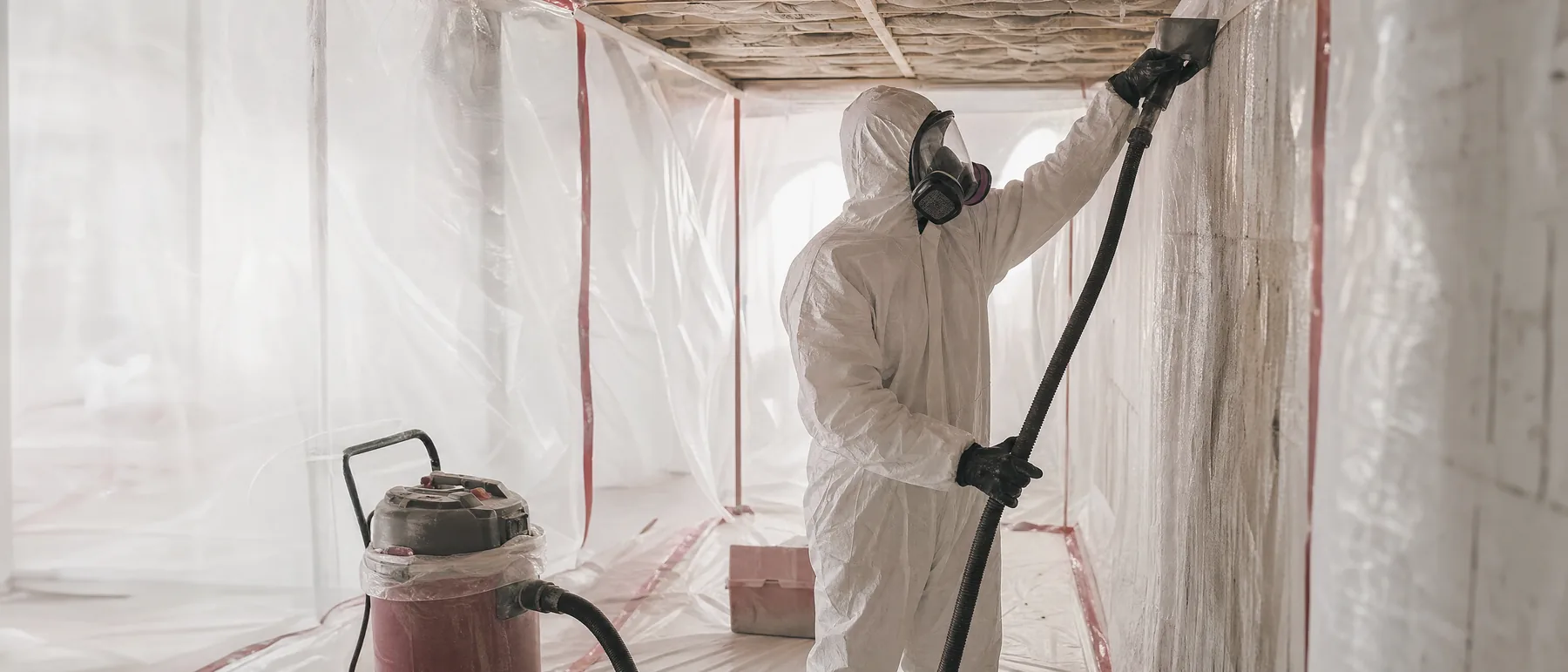
- Containment: crews seal the area with plastic sheeting and run filtered air machines to keep fibers from escaping.
- Labor: per hour, trained workers charge $75 to $200, with higher rates for complex jobs.
- Permits and disposal: expect $50 to $100 for local permits, while double-bagged waste hauling costs $10 to $50 per cubic yard.
Contractors might face extra steps from state and city rules; for example, New York City requires filing a notice 7 days before work starts, with fines of $1,200 to $10,000 if ignored.
Steps to take before paying for removal
- Leave it alone until someone checks it. Leaving it alone is safest when the material is in good condition and nothing will disturb it, says the EPA, which also warns that sampling it yourself can be more hazardous.
- Get an accredited inspector to test the material. Just looking usually won't reveal asbestos, and a building's age gives only a clue (check the year bands for popcorn ceilings to see how). After sending samples to a lab, the inspector provides a written report showing where the asbestos is and what steps to take.
- Hire a different firm to do the work. The EPA recommends using two separate companies so the firm assessing the need is not the same one hired to do the removal. Make sure the job comes with a written contract. It should cover the cleanup, the plan for the work, and which federal, state and local rules the contractor will follow.
- Once the work ends, request a test of the air. An independent air testing firm or inspector can verify no extra fibers remain in the air, while the contractor should provide written confirmation that all steps were followed.
Asbestos encapsulation or removal: is removal worth it?
Not all material in good shape must come out. To keep fibers trapped, many families choose encapsulation, which seals asbestos in place with an airtight coat. Sealing runs $2 to $6 per square foot (Angi), making it roughly 40% to 60% cheaper than full removal. Especially before a remodel, this approach is not safe or allowed in every situation.
If someone in your home is already ill
If a person in the home has an asbestos disease, bankruptcy trusts may pay a claim; see which trusts fit by answering three questions. There are 54 active trusts, and 48 of them publish a current payment percentage between 0.7% and 100%; each one pays its scheduled disease value multiplied by that percentage. Most families file claims with more than one trust at the same time, and lawsuit deadlines fall 1 to 6 years after a diagnosis. Start one by calling the claims team.