
Popcorn ceiling asbestos: how likely it is, by the year built
Enter the year your home was built to see how likely its popcorn ceiling is to hold asbestos.
The year is a clue; only a lab test of a sample is proof.
- EPA bans the remaining spray-on asbestos surfacing
- 1978
- Professional test, most homes
- $231 to $850
- Removal, per square foot
- $9 to $20
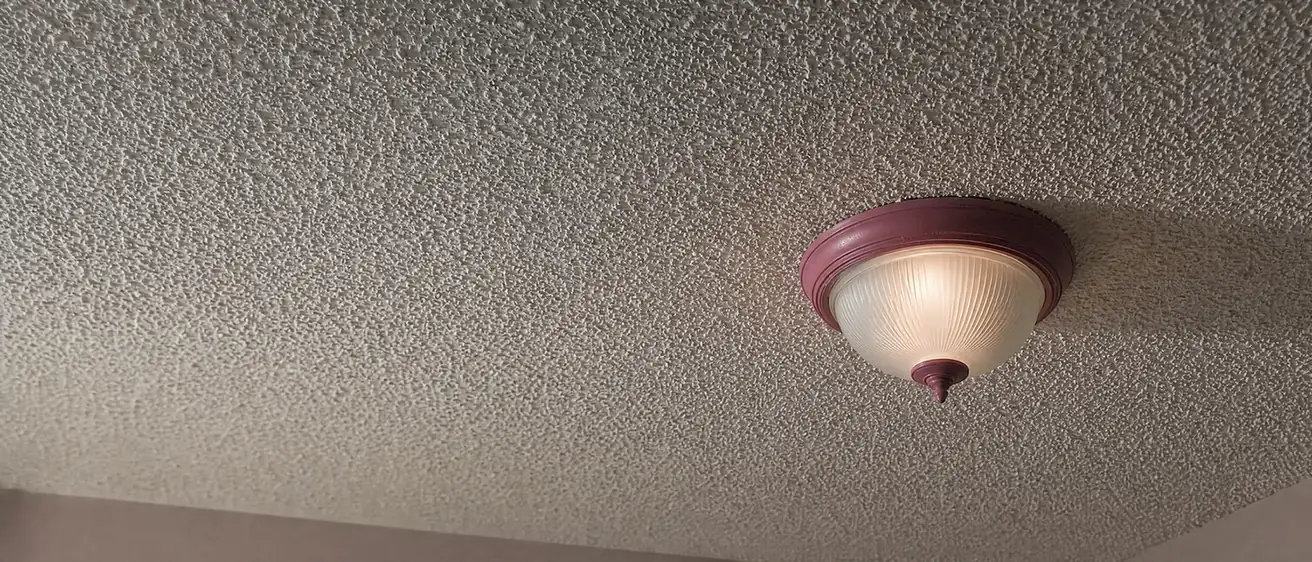
If your home was built before 1990, its popcorn ceiling could contain asbestos, and the older the house, the more likely it is. The year it was built is a good first clue. In most cases you cannot tell just by looking whether a ceiling has asbestos, unless the material is marked.
What does your home's build year tell you?
Sprayed popcorn ceilings used asbestos from 1945 until at least 1980. Even after the 1978 ban, companies were allowed to finish stock already on hand. That is why ceilings from these years may still have it.
| When the home was built | Is asbestos possible in the ceiling? |
|---|---|
| Built in 1977 or earlier | Yes, it may |
| Built between 1978 and 1989 | Possibly, so have it tested before any scraping |
| Built in 1990 or after | Not likely |
Year bands from the CPSC guide to asbestos in the home and EPA's list of asbestos actions.
The home's age is only a clue, not proof of whether its ceiling contains asbestos. A ceiling may have been added or redone during a renovation before the mid-1980s, so it can be older than you'd guess. If you think that might be the case, a test is worth it.
Asbestos in older homes, material by material
Popcorn ceiling asbestos rules came in steps: the CPSC banned asbestos patching compounds in 1977, and EPA banned spray-applied asbestos surfacing in 1973 and 1978. These rules limited making, selling or spraying the material, not what was already in homes, so a build year tells you how likely asbestos is, not whether it is there; only a lab test of a sample can tell for sure.
| Material | Federal rule |
|---|---|
| Popcorn and other sprayed ceilings | EPA banned spraying asbestos surfacing for fireproofing and insulation in 1973 and for other uses in 1978; since 1990 spraying material with more than 1% asbestos on buildings is barred.Rule on applying it, EPA |
| Ceiling tiles | EPA lists them as a legacy use: making and selling them has ended, but tiles already installed may still contain asbestos.Rule on making or selling it, EPA |
| Vinyl floor tile, sheet flooring backing and mastic | Asbestos flooring felt has been banned since 1989; since 2019, vinyl-asbestos floor tile and asbestos adhesives cannot return to the market without EPA review.Rule on making or selling it, EPA |
| Joint compound, patching compound and textured paint | The CPSC banned asbestos in wall patching compounds in 1977; it says their use on wall and ceiling joints, and in textured paint, was banned that year.Rule on selling it, CPSC |
| Cement siding and roofing shingles | Since 2019, asbestos cement products and roofing felt cannot return to the market without EPA review.Rule on making or selling it, EPA |
| Pipe, boiler and furnace insulationHouses built 1930 to 1950 | In 1975 EPA banned installing molded or wet-applied asbestos pipe and block insulation that crumbles once dry on boilers and hot water tanks.Rule on applying it, EPA |
| Vermiculite attic and wall insulation1919 to 1990, mostly from one Libby, Montana mine | No ban is named; EPA says to assume vermiculite insulation came from Libby and treat it as if it contains asbestos.EPA |
Leave material you suspect alone, and have an accredited inspector take a sample for a lab rather than scraping it yourself. For vermiculite insulation, EPA says a test is not needed: treat it as asbestos.
Next, see what asbestos testing costs and removal cost by area.
Dates from EPA's list of asbestos actions and the CPSC guide to asbestos in the home; prices from Angi.
Could a popcorn ceiling with asbestos be dangerous?
As long as the ceiling stays intact and untouched, the asbestos in it carries little risk. The catch is that popcorn material is friable, meaning it breaks apart with little effort, and even a small disturbance can send fibers loose into the air.
Work like scraping, sanding, drilling, or cutting can set those fibers free. Everyday wear can too. Water damage is also a worry because it can loosen the material, and once it dries the fibers can be breathed in if the area is not sealed right away.
In one study, the air in rooms with asbestos ceilings held very few fibers when the ceiling was left alone, but the level shot up hundreds of times higher during heavy ceiling work and removal. Even a single exposure can increase the risk of asbestos-related illness.
How to check your ceiling safely
The EPA’s advice is simple: leave the ceiling untouched. From the floor, check for any tears, scrapes, or water stains.
When the ceiling is intact and nothing will disturb it, testing isn’t necessary. It’s wise to bring in a professional inspector when remodeling is planned or the ceiling is damaged. Please do not sample it yourself, since sampling done poorly can be more dangerous than simply leaving the material where it is.
Your local health department can point you to certified asbestos inspectors.
Sharing your home with an asbestos ceiling
When a ceiling does turn out to contain asbestos, these 5 habits go a long way toward keeping it undisturbed:
- Let every worker who comes into your home know it’s there.
- Keep tape, screws, and nails out of the ceiling.
- Leave it alone, with no scraping or touching.
- Skip shelving that fastens to it.
- Keep bunk beds out of that room.
Repair or removal
Professionals can deal with the problem in 2 ways. Repair seals or covers the ceiling while the asbestos stays put. Removal takes it out and is complex work. If handled badly, removal can actually make exposure worse.
Call in a trained, accredited professional whenever the ceiling has more than slight damage or planned work on the home will disturb it. Federal law does not demand that workers in detached single-family homes have this training, though some states and localities do.
Hiring 2 different firms helps avoid a conflict of interest: one inspects, and the other repairs or removes. Before work begins, get a written contract that spells out how the job will be done, how cleanup will happen, and which federal, state, and local rules the contractor has to follow. Afterward, cleanup should rely on wet methods or a HEPA vacuum, meaning a vacuum with a very fine filter. Never use a regular vacuum.
What does removal cost?
Expect to pay $9 to $20 per square foot to have an asbestos popcorn ceiling taken out.
Before you budget for removal, remember that repair, which seals or covers the ceiling, is also an option.
Diagnosed with an asbestos illness after living or working under one of these ceilings? Ask which trusts may pay.